
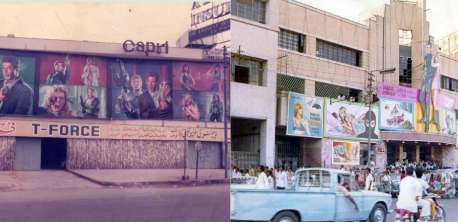
From 1,585 Cinemas to a Near Collapse
Pakistan’s cinema industry has faced a massive crash. In the late 1970s, the country had 1,585 movie screens. Today, less than 140 screens are left open. Rawalpindi once had 24 busy historic cinemas. Today, the city center does not have a single one left. Going to the movies used to be a fun, everyday activity for everyone. Now, it has become an expensive luxury that only wealthy people in big cities like Karachi, Lahore, and Islamabad can afford.
Destroyed for Shopping Plazas
If you walk through old areas of Lahore or Karachi today, famous old movie theaters like Nishtar Cinema and Plaza Cinema are gone.
Karachi’s Lost Icons: Famous cinemas like Prince Cinema (which showed the premier of Star Wars in Pakistan in 1977), Capri, and Bambino cinemas have either stopped showing films or been replaced by commercial spaces. Rawalpindi’s latest loss: 75-year-old Nishat Cinema was recently demolished to make way for an 8-story shopping plaza.
- Selling the Land: When people stopped watching movies, theater owners started losing money. At the same time, the price of city land went up.
- The New Buildings: To save themselves from losing money, owners tore down the grand old theaters. They built commercial shopping malls, apartment buildings, and wedding halls in their place.
Why Did Pakistan’s Cinema Culture Die?
The movie culture did not die overnight. It was ruined by a mix of bad politics, bans, high prices, and new technology.
Strict Laws in the 1980s
The trouble started under General Zia-ul-Haq’s government. The state put heavy taxes on tickets and set very strict rules on what could be shown in movies. Creative filmmakers left the business, the quality of movies dropped, and families stopped going to theaters.
The 2019 Bollywood Ban
In the 2000s, modern theaters (multiplexes) opened up. But these new theaters depended heavily on Indian Bollywood movies to make money, since Pakistan only makes a few movies a year. When Pakistan banned all Bollywood movies in 2019 due to political tensions, theaters instantly lost 70% of their earnings. Local movies and Hollywood films were not enough to fill the empty seats.
High Electricity Bills and Inflation
Running a modern theater in Pakistan today is too expensive. Because of constant power cuts, theaters must run huge generators. With electricity and fuel prices soaring, owners have been forced to make tickets very expensive. A normal middle-class family can no longer afford to buy tickets and snacks.
Netflix and Smartphones
The final blow came from cheap internet and streaming apps like Netflix. People realized that buying a monthly mobile app subscription is much cheaper than buying a single movie ticket. Instead of going out, everyone started watching movies at home on their phones.
Can Lollywood Ever Recover?
The film industry is stuck in a trap. Filmmakers cannot spend money to make good movies because there are not enough theaters left to make their money back. At the same time, theater owners cannot stay open because there are not enough local movies to show. Without government help—like lower electricity bills for theaters and tax cuts—the traditional Pakistani cinema experience might disappear forever.