

The embassies of France and Germany in Pakistan jointly commemorated “German-French Reconciliation and European Unification: 80 Years of a Continuing Success Story” at the Marriott Hotel, Islamabad, on Tuesday. The high-level event was attended by senior diplomats, academics, policy experts, and a large number of students. The event was executed by the Afkar-e-Taza ThinkFest.
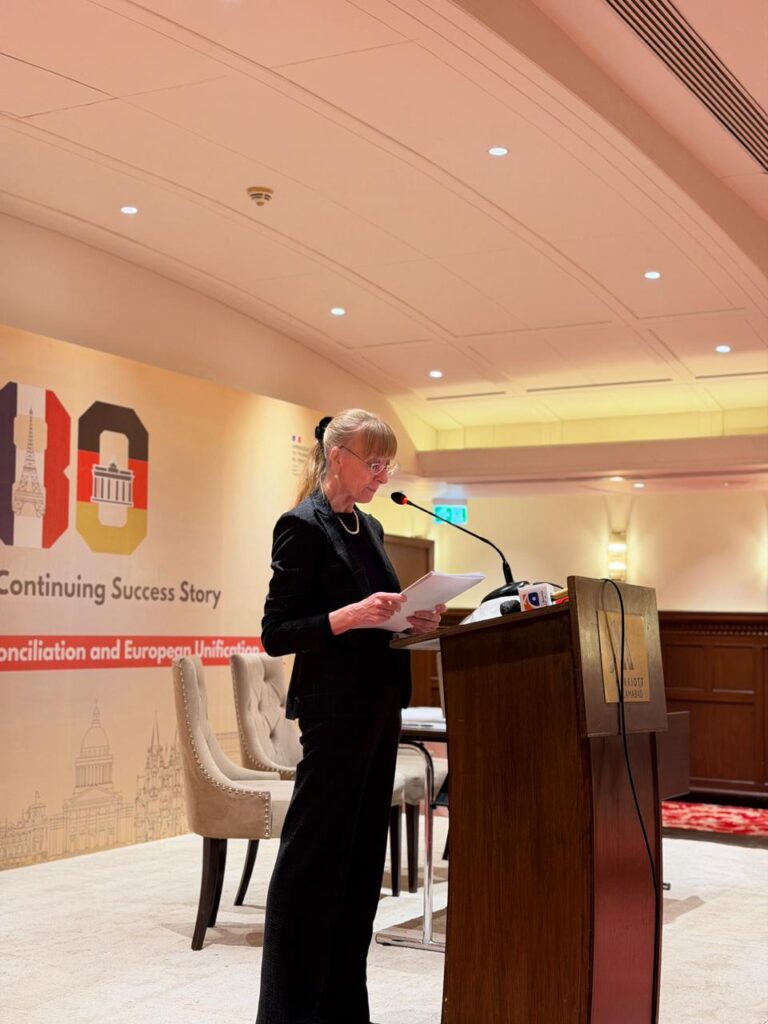
Speaking at the occasion German Ambassador Ina Lepel emphasised that what may now seem like routine cooperation between the two nations is actually the strongest proof of Europe’s success story—unimaginable for earlier generations shaped by the two World Wars. Addressing current geopolitical challenges, Ambassador Lepel said Europe must remain united in supporting Ukraine against Russian aggression, describing it as essential for the con
tinent’s security and democratic stability. She reiterated that Franco-German cooperation continues to be indispensable as Europe navigates rising global tensions.
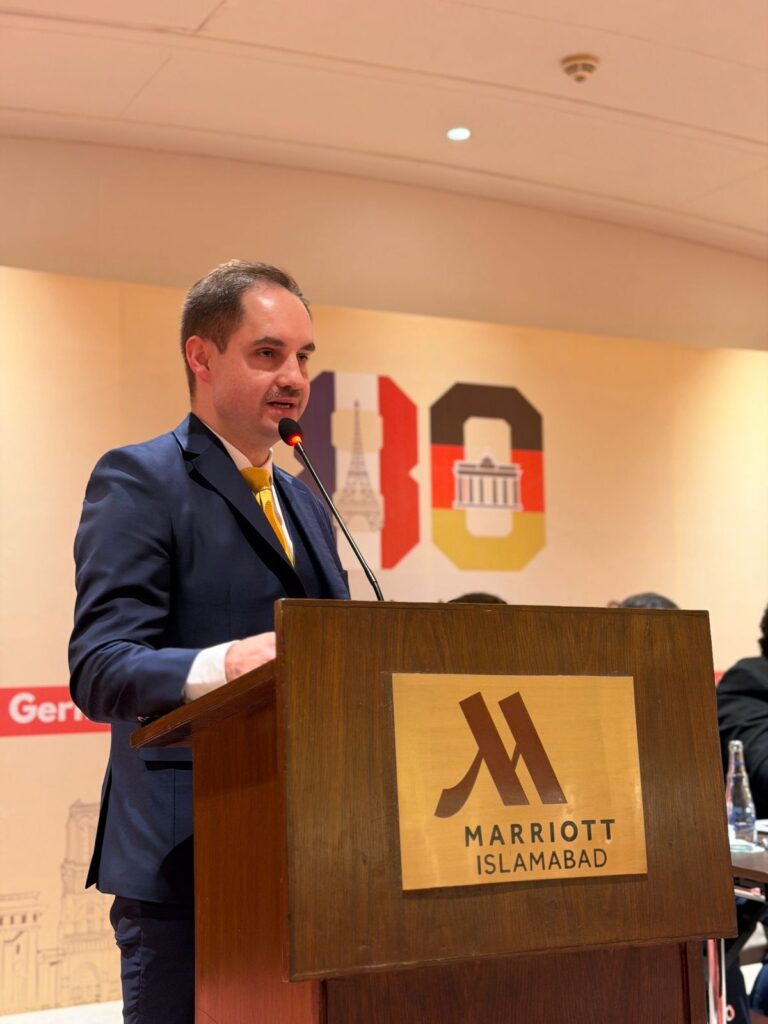
French Ambassador Nicolas Galey highlighted that France and Germany—once adversaries across centuries—transformed their relationship through the 1963 Élysée Treaty, creating an irreversible bond built on peace, economic interdependence, and shared democratic values. He underlined key sectors of cooperation including the common market, single currency, youth exchange programmes, and clean energy. He also noted the significance of joint diplomatic initiatives in Pakistan, including efforts on human rights, press freedom, and development cooperation.
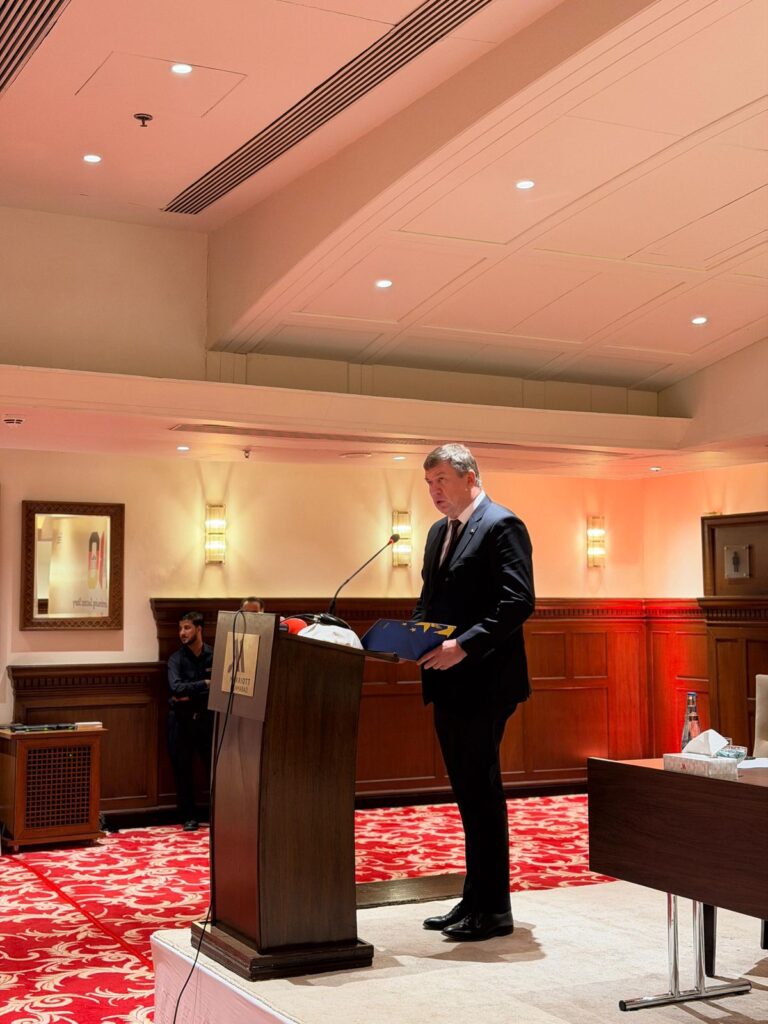
The Head of the EU delegation to Pakistan Ambassador Raimundas Karoblis also shared his thought, highlighting how a united Europe gives the world an example of cooperation while maintaining state sovereignty.
The event also featured a panel discussion moderated by Dr Salma Malik from Quaid-e-Azam University. At the panel, Professor Riaz Shad, Dean of Social Sciences, NUML, traced the history of how through small, yet concrete steps, France and Germany built confidence and trust amongst their people which then translated into deeper cooperation and unity. Ambassador (Ret) Jauhar Saleem, president of the Institute for Regional Studies, then drew out the implications of Franco-German unity for Pakistan, noting that the region will prosper rapidly if such spirit is fostered in the region. He emphasised that while Pakistan is very open to cooperation, some of its neighbours are unwilling to creatively reimagine the region. Dr Mujtaba Isani the DAAD Assistant Professor at the Quaid-e-Azam University then highlighted the importance of people to people contacts and the role of students and academics in such endeavours.
The event ended with a spirited questions and answers session, and also comments from Ms Nadia Rahman, Member of the Planning Commission, who underscored the importance of trade as the main vehicle of closer regional cooperation. The colloquium concluded with a shared call to uphold the spirit of reconciliation, dialogue, and integration that has defined European unity for decades, and serves as a global example of how former rivals can forge lasting peace and prosperity.