
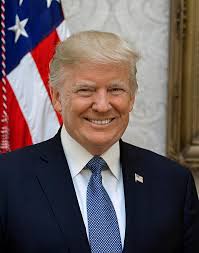
Pakistan and the United States have shared a very turbulent history when it comes to foreign policies and financial aid. But looking at Donald Trump you cannot find a comparable display of recklessness from the leader of the free world towards it’s allies, including Pakistan. Before the inauguration, the president-elect made a phone call to then Prime Minister Nawaz Sharif, praising him even though they had never met. On October 2017, the president tweeted this:

Then, Trump stated that Pakistan is obliged to help the US, while addressing a new national security strategy. Pakistan’s stance on US foreign policy has changed over time as America is losing its influence over both Islamabad (civilian government) and Rawalpindi (military). On the eve of the new year Trump tweeted the following regarding Pakistan:

After the tweet tirade, the U.S. ambassador to Pakistan was summoned for a comment and for a few days even his office didn’t have an explanation for it. According to the Wall Street Journal, Foreign Minister Khawaja Asif said:
“We are ready to publicly provide details of the US aid that has been received by the country” .
He stated that the US had turned Islamabad into a ‘whipping boy’ but no more, as Pakistan had already done enough. “We have already said no more [to the Americans] so Trump’s no more is of no importance now,” he added.

The US is frustrated with the cost of the Afghan war and is using Pakistan as a scapegoat for the failure. Instead of pulling out troops, US has had to deploy more troops to Afghanistan. On December 22nd, the US Vice President Mike Pence paid a surprise visit to Afghanistan’s Bagram airbase and warned troops that Trump has “put Pakistan on notice” . But again, alienating it’s only military ally in the region is not a smart move.

The latest tweet by Trump has been criticised not only by Pakistan but the US media too. CNN has called the attack unfair and factually incorrect, it also supported the defence ministry’s statement. Trump’s claim of $33 billion in aid is based on allocated aid and not actual dispersed funds. This figure is a sum of $19 billion in security and economic aid and an additional $14.59 billion from the Coalition Support Fund (CSF), which reimburses US allies for logistical and military support. According to USAID, since 2001 Pakistan has only received $14.79 billion in civilian and military aid. The CSF’s funds have been delayed or blocked over time based on concerns for lack of effort on Pakistan’s behalf to curb terror networks.

Former American Ambassador to Pakistan, Richard Olson warned that Pakistan has more leverage than the US perceived in his op-ed titled “How Not to Engage With Pakistan”. He said “Pakistan, like most countries, reacts very badly to public attempts to force its hand. It is likely to respond by showing how it can truly undercut our position in Afghanistan” . One of Trump’s very first moves after taking office was to sign a Muslim travel ban, which received a huge backlash. Though it did not include Pakistan, Pakistani citizens now face a more extreme visa vetting process.
Trump and his Islamophobia is no a secret, and the worst part is his ignorance regarding it.
If you pay close attention to the current leadership of both the US and Pakistan, there are many similarities. Taking the Pakistan Muslim League-Nawaz leadership and Trump as an example, one can observe how after taking office the campaign promises have phased out. After being elected, it becomes a family business for both Nawaz and Trump. When the going gets tough Nawaz hides in England and Trump flees to Florida. However, Nawaz got deposed and disqualified for his dishonest claims and Trump still remains under investigation for his campaign collusion with Russia. One would think that instead of lashing out at Pakistan, Trump might find a sympathetic ear in Nawaz’s ruling party. 
Now, Trump’s bizarre policies and rants have managed to alienate many allies.
Whichever ally the US is antagonizing, China is swooping in to strike the iron while it’s still hot. Because of China’s alliance and support, the US claims are not as threatening to Pakistan. Not only is China one of Pakistan’s oldest friends, but the $62 billion CPEC that is part of OBOR has raised the Chinese stake in Pakistan’s development along with regional stability and security. On December the 6th, Trump decided to recognize Jerusalem as Israel’s capital further creating tension with its key allies including the UK, Saudi Arabia, and Canada. What Pakistani officials should be worried about now, is Kashmir. What if one day from his Mar-a-Lago estate while golfing, Trump tweets away that the US recognises the disputed territory of Kashmir as part of India. That is just a disaster waiting to happen between two neighboring nuclear powers with superpowers like China and Russia taking sides too. Ever since Trump took office a year ago there has been no top-level visit between Trump’s aides and Pakistani officials. The decision to cut-off security aid is a hasty one and Pakistan is playing smart by keeping communication open with the US. But with the changing Pakistani political situation and upcoming elections, the US should not expect Pakistan to stay silent in response to American pressure or rhetorical attack.